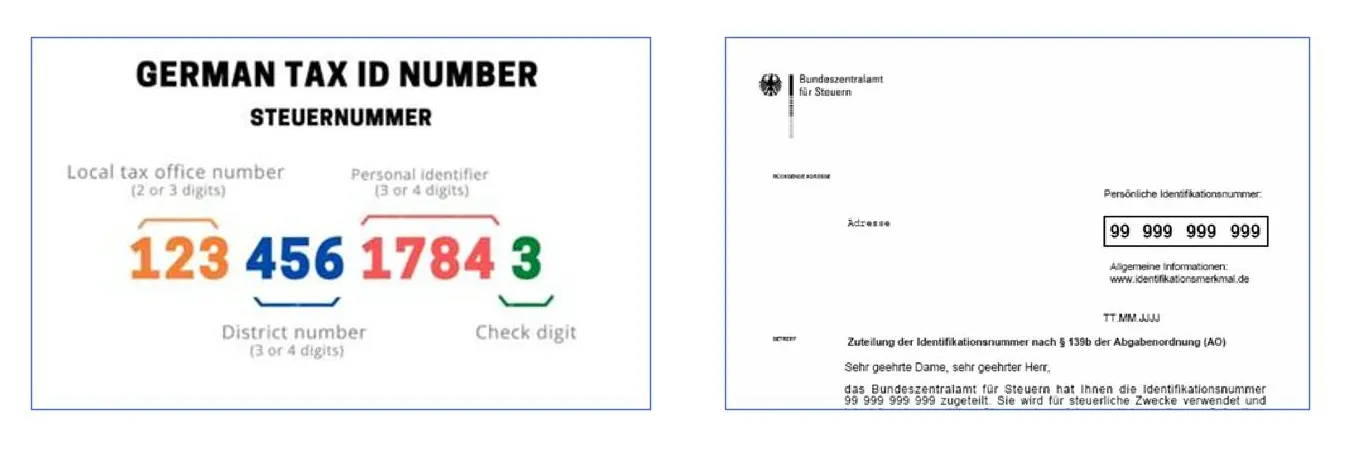
Starting a job in Germany and suddenly asked for your Tax ID, while the tax office talks about a tax number?
Many expats assume they are the same. They’re not.
Understanding the difference helps you avoid payroll delays, tax filing issues, and unnecessary stress during your relocation.
What is the Tax ID in Germany?
Your permanent personal tax number
The Tax Identification Number (Steuer-ID) is your lifelong personal tax number.
It is: – Issued automatically after your address registration (Anmeldung) – Sent to you by post – Valid for life – Unchanged even if you move or change employers.
You need your Tax ID for:
- Starting a new job
- Salary and income tax deductions
- Official tax communication
Official information: Federal Central Tax Office (BZSt) https://www.bzst.de
What is the Tax Number (Steuernummer)?
Your local tax office file number
The tax number is issued by your local Finanzamt.
Unlike the Tax ID, it is linked to your tax case, not permanently to you as a person.
It may change if:
- You move to a different city
- Your responsible tax office changes
- You become self-employed
You’ll see it on: – Tax returns – Tax assessments – Invoices (if you run a business)
Tax ID vs Tax Number Germany: The simple difference
- Tax ID = identifies you as a person (lifetime number)
- Tax number = identifies your tax file (can change)
If you’re new to Germany, this distinction is especially important when starting employment or registering as self-employed.
Why this matters when relocating to Germany
Many international professionals worry they are missing documents or doing something wrong. In most cases, it’s simply confusion about terminology.
Clear structure reduces mistakes, and gives you back control during a complex transition.
If you want personal guidance on registration, tax setup, or your first steps in Germany, you can book a free consultation to clarify your situation and move forward with confidence.